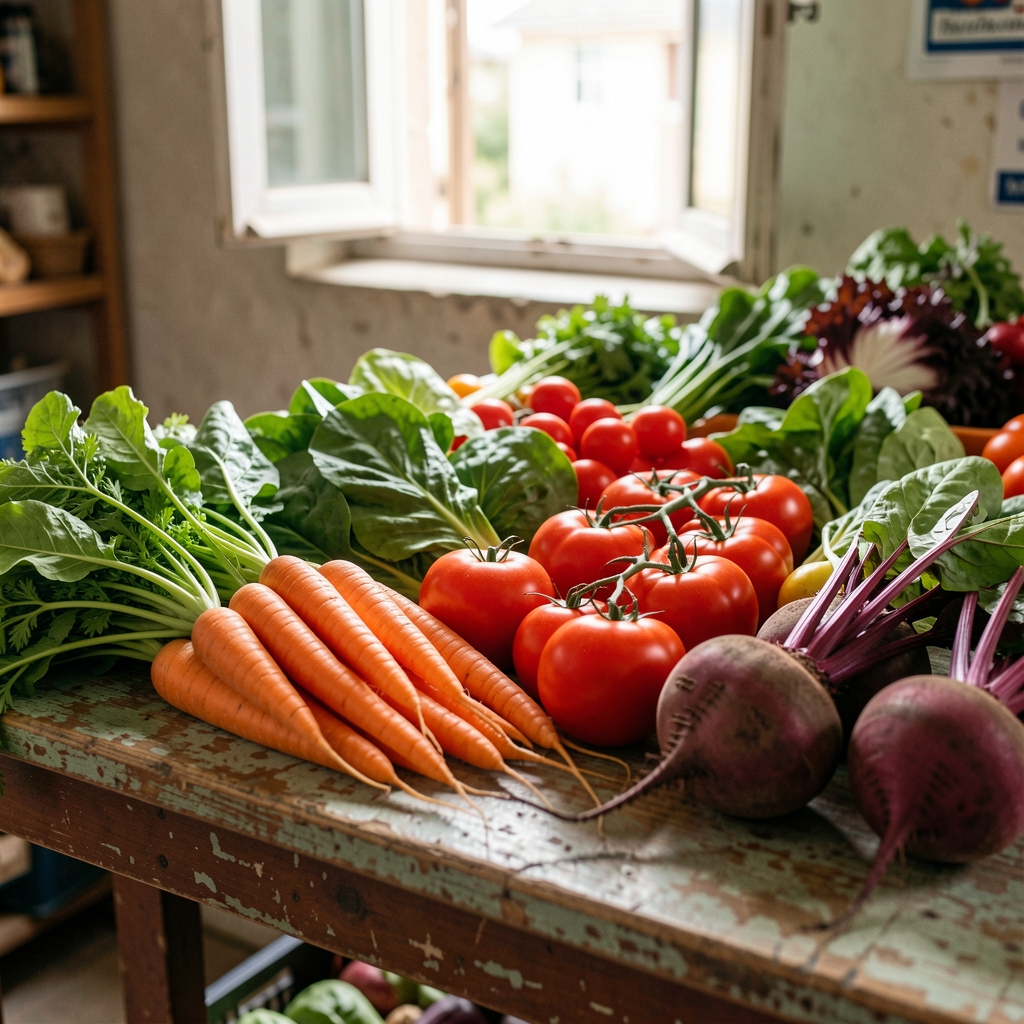
Sunday in the kitchen is often spoken of as a burden — a corrective for a week of disorganised eating. This framing treats meal preparation as a form of catch-up, a reset after perceived failure. An alternative framing — and the one this record explores — positions the Sunday kitchen session as a forward-looking planning instrument: a tool for structuring the nutritional content of the week before it begins rather than a penance for the week that has passed.
This distinction matters because it changes what you are doing when you cook on Sunday. You are not repairing the previous week's diet. You are setting the parameters for the next. The pots on the stove are the output of a prior decision — what to cook — and that decision is where the nutritional work actually happens.
The Structure of a Practical Weekly Menu
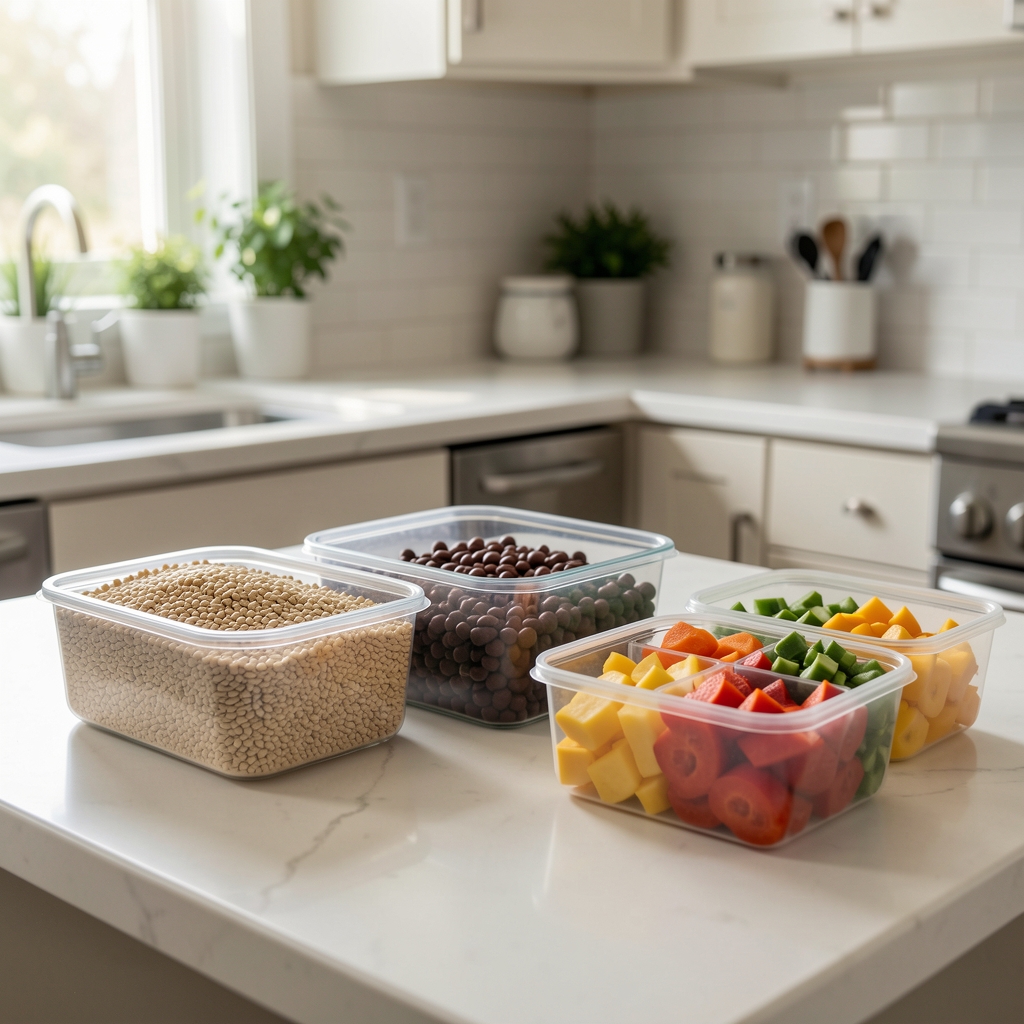
Over twelve weeks, a simple weekly menu structure was documented. The structure divided the week into three cooking sessions: Sunday (main preparation), Wednesday (one supplementary cooking session), and one ad hoc session for any shortfalls. The Sunday session produced components rather than finished meals — a pot of grains, a portion of roasted vegetables, a legume base, a protein component — which were then assembled in different combinations across Monday, Tuesday, and Wednesday.
The component-based model has a practical advantage over preparing complete dishes in advance: it is more flexible and generates less food fatigue. A pot of roasted root vegetables eaten as a warm salad on Monday, added to a grain bowl on Tuesday, and incorporated into a frittata on Wednesday involves the same ingredient three times, but in sufficiently different preparations that the repetition is unremarkable.
Meal planning at this level is not about precision. It is about setting a floor — ensuring that the week, as a whole, contains adequate vegetable variety, a protein source at most meals, and sufficient whole grains to support consistent fibre intake. The ceiling — restaurant meals, social eating, spontaneous cooking — is left open. The plan governs the structure; it does not constrain the texture.
Portion Awareness Without Counting
Portion control is frequently discussed in terms of measurement — weighing food, counting calories, tracking macros. This record was interested in a different approach: whether portion awareness could be developed through repetition and observation rather than measurement, and whether that form of awareness was sufficient for steady energy balance over a twelve-week period.
The observation was that familiarity with a small number of dishes — cooked repeatedly — produces reliable portion intuition more effectively than tracking unfamiliar foods. When the same grain bowl is assembled fifteen times across three months, the cook develops an accurate visual and tactile sense of what a single portion looks like. This sense does not generalise automatically to new dishes, but it does transfer to structurally similar ones.
A practical food journal is not a calorie ledger. It is a record of what was actually eaten — a document that, reviewed across a week, reveals the gaps in a diet without requiring mathematical conversion.
Calorie awareness, at the level documented here, operates as a rough check rather than a precise ledger. Awareness that a meal is likely higher in calorie density than typical — a restaurant meal, a celebratory occasion — is sufficient to prompt a minor adjustment in the following day's eating without conscious calculation. This is a different skill from formal tracking, and it is one that develops through the kind of repetitive cooking that weekly meal planning tends to produce.
The Grocery Planning Component
Effective meal planning depends on a prior stage: grocery planning. The relationship between the two is often underexamined. A weekly menu that is not backed by a complete grocery list will be disrupted the first time a key ingredient is absent. A grocery list not derived from a specific menu will produce a kitchen full of individual items that do not assemble into coherent meals.
The documented practice of listing menu components first, then deriving the grocery list from those components, rather than the reverse, produced fewer mid-week substitutions and less food waste than the baseline period (tracked before the twelve-week record began). The menu-first approach also produced more intentional variety — because variety was designed into the menu stage rather than hoped for at the point of shopping.
A further observation: the weekly menu generates a reusable template. By week six, the menu structure was substantially the same each week with rotating ingredients. This templating reduced the decision load of meal planning significantly — from twenty-plus decisions per week to approximately five (which grain, which vegetable base, which protein component, which legume, which supplementary element).
Home-Cooked Meals and Their Nutritional Significance
The nutritional case for home-cooked meals is well-established in published dietary research. Meals prepared at home tend to have lower sodium content, more controlled fat quality, and larger vegetable portions than equivalent meals consumed out of home. This is not a case against eating out — but it is a case for home cooking as a reliable nutritional anchor when it constitutes the majority of a week's meals.
Across the twelve-week record, weeks in which the Sunday preparation session was completed in full produced measurably different dietary patterns to weeks in which it was skipped. In preparation weeks, vegetable portions across the week were larger and more varied; protein intake was more consistent; and reliance on convenience foods was lower. In skipped weeks, the reverse was true. The observation reinforces the planning function of the Sunday session: its nutritional impact is not limited to Sunday's meal but extends across the full week.
Gut-Friendly Recipes Within a Weekly Structure
The inclusion of gut-friendly preparations — fermented vegetables, legume-based dishes, high-fibre whole grain components — was more consistent when these items were built into the weekly menu at the planning stage than when they were added opportunistically. A menu that includes one fermented element (a portion of sauerkraut, a yogurt-based sauce, a portion of miso-dressed grains) and one legume element (lentils, chickpeas, beans) as standard components produces consistent prebiotic and fermented food intake without requiring daily decision-making.
This is, in effect, a form of dietary architecture: designing a default that includes these elements, so that achieving them requires no extra effort in the moment. The planning session carries the nutritional intention; the cooking session executes it.
Observations on Sustainable Weight Approach
Across twelve weeks of structured weekly meal planning, the pattern that emerged most clearly was not dramatic — it was the normalisation of a balanced eating structure. The absence of spontaneous high-calorie meals was not the result of willpower applied in the moment; it was the result of a structured default that made a balanced meal the easiest available option in most situations across the week.
This is the mechanism through which structured meal planning contributes to a sustainable weight approach: not by imposing restriction but by reducing the number of moments at which unrestricted choice must be made. When a prepared grain bowl is ready in the refrigerator, the choice at lunchtime is not between cooking and not cooking — it is simply a matter of assembly. The decision was made on Sunday.
Articles published on Galeno Field Notes are editorial in nature and reflect the writers' observations on everyday wellness practices. The content is not intended as professional advice. Readers with specific concerns are encouraged to speak with a qualified wellness or nutrition professional before introducing any new habit or routine to their daily life, particularly if they have specific dietary requirements.